| id | code-coverage | |||||
|---|---|---|---|---|---|---|
| title | Code Coverage | |||||
| sidebar_label | Code Coverage | |||||
| description | Learn what code coverage is and how it helps both QA and developers through schema, branch, and statement coverage. | |||||
| tags |
|
|||||
| keyword |
|
import Tabs from '@theme/Tabs'; import TabItem from '@theme/TabItem';
Code coverage is a metric that measures how much of your source code is executed while running automated tests.
It helps teams understand the quality of their tests and identify untested areas of the codebase.
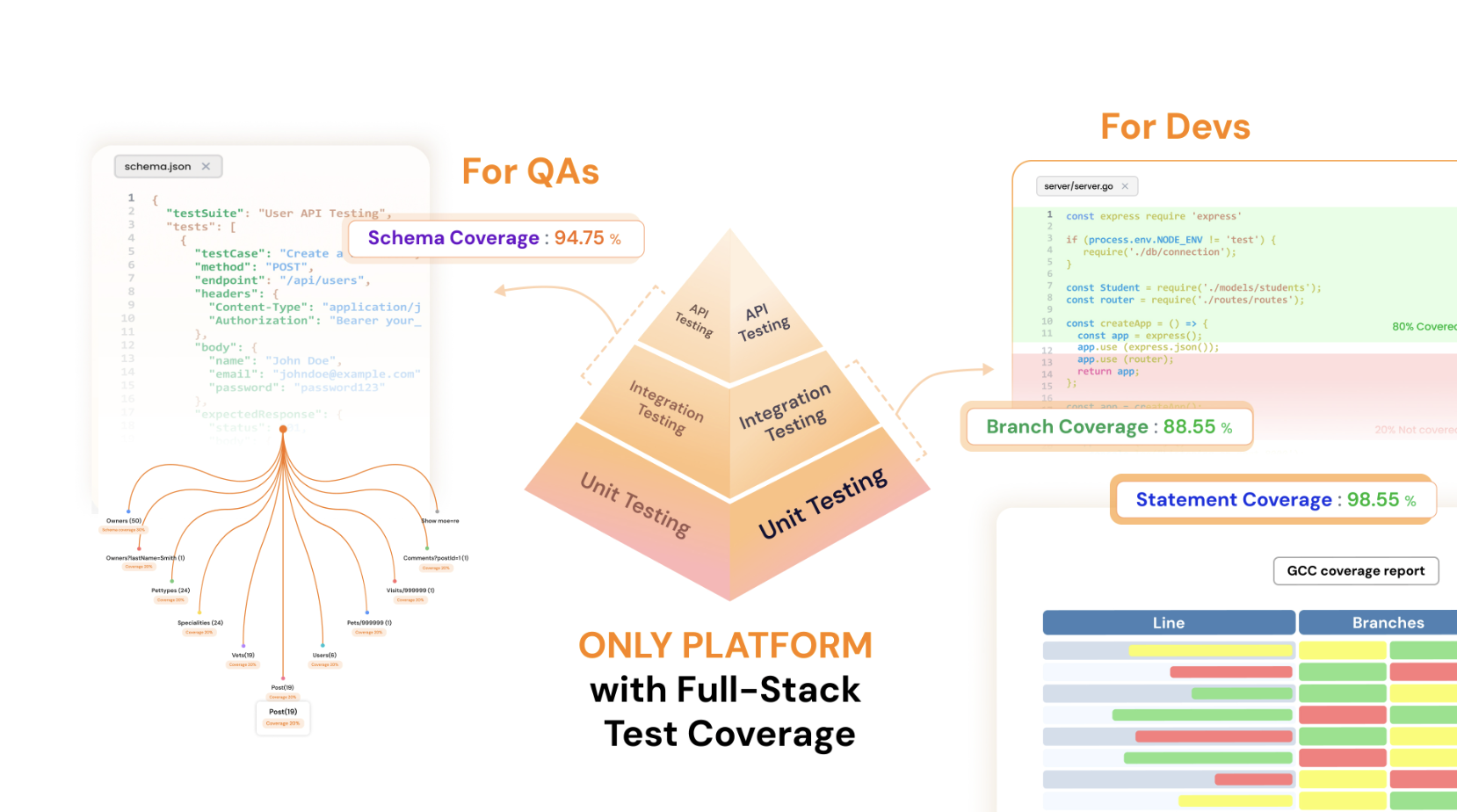
High code coverage does not always mean good tests, but it ensures that critical parts of your application are not left untested.
Schema coverage measures how much of your API schema (endpoints, request/response fields, contracts) is exercised during testing.
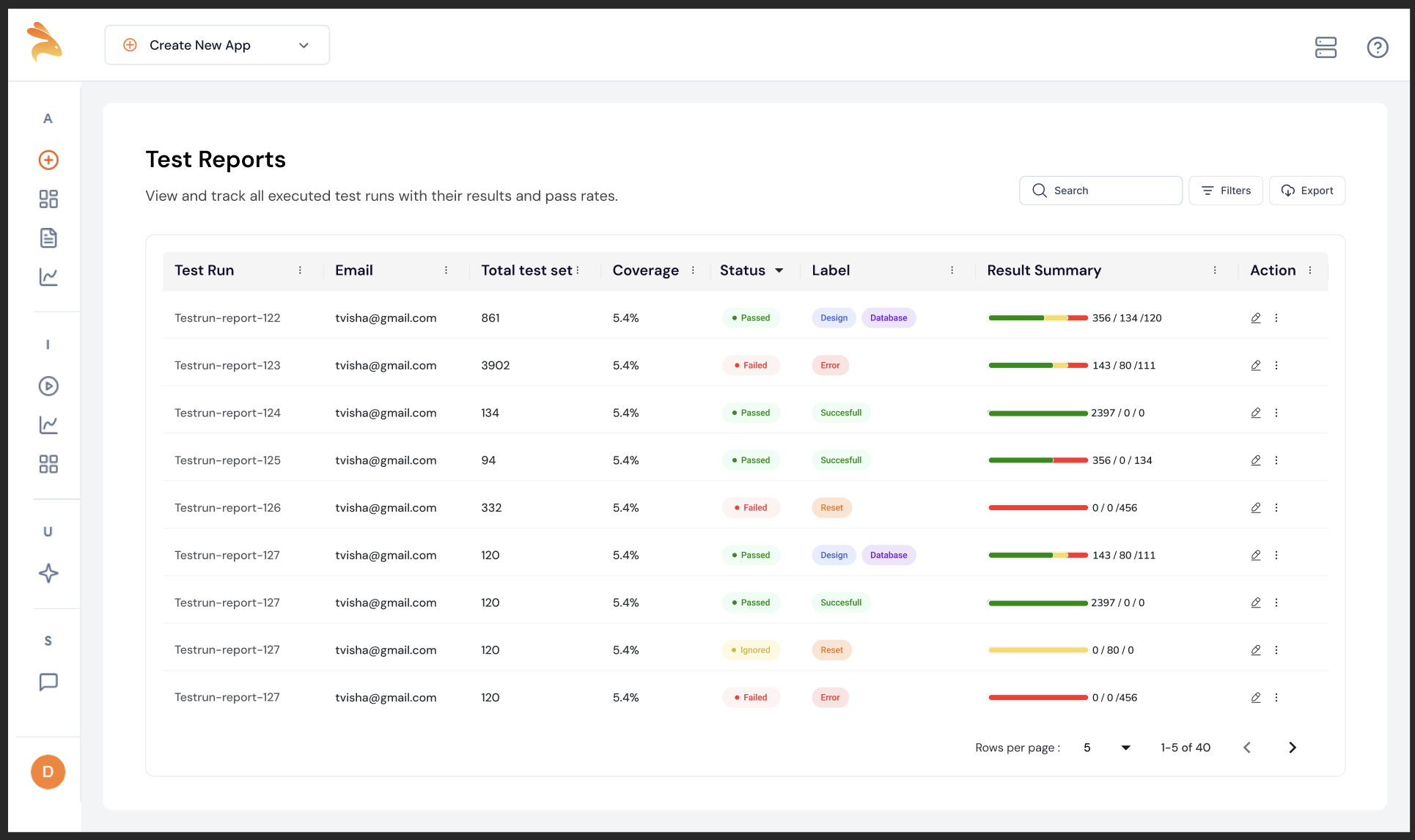
- Ensures all API fields are validated at least once
- Detects missing test cases for optional/edge fields
- Helps QA teams ensure specification-to-implementation accuracy
Branch coverage measures whether all possible paths (if/else, switch cases, loops) in the code have been executed by tests.
- Ensures both true and false conditions are tested
- Helps catch untested edge cases in logic
- More thorough than statement coverage
Statement coverage measures how many individual lines/statements of code are executed at least once during testing.
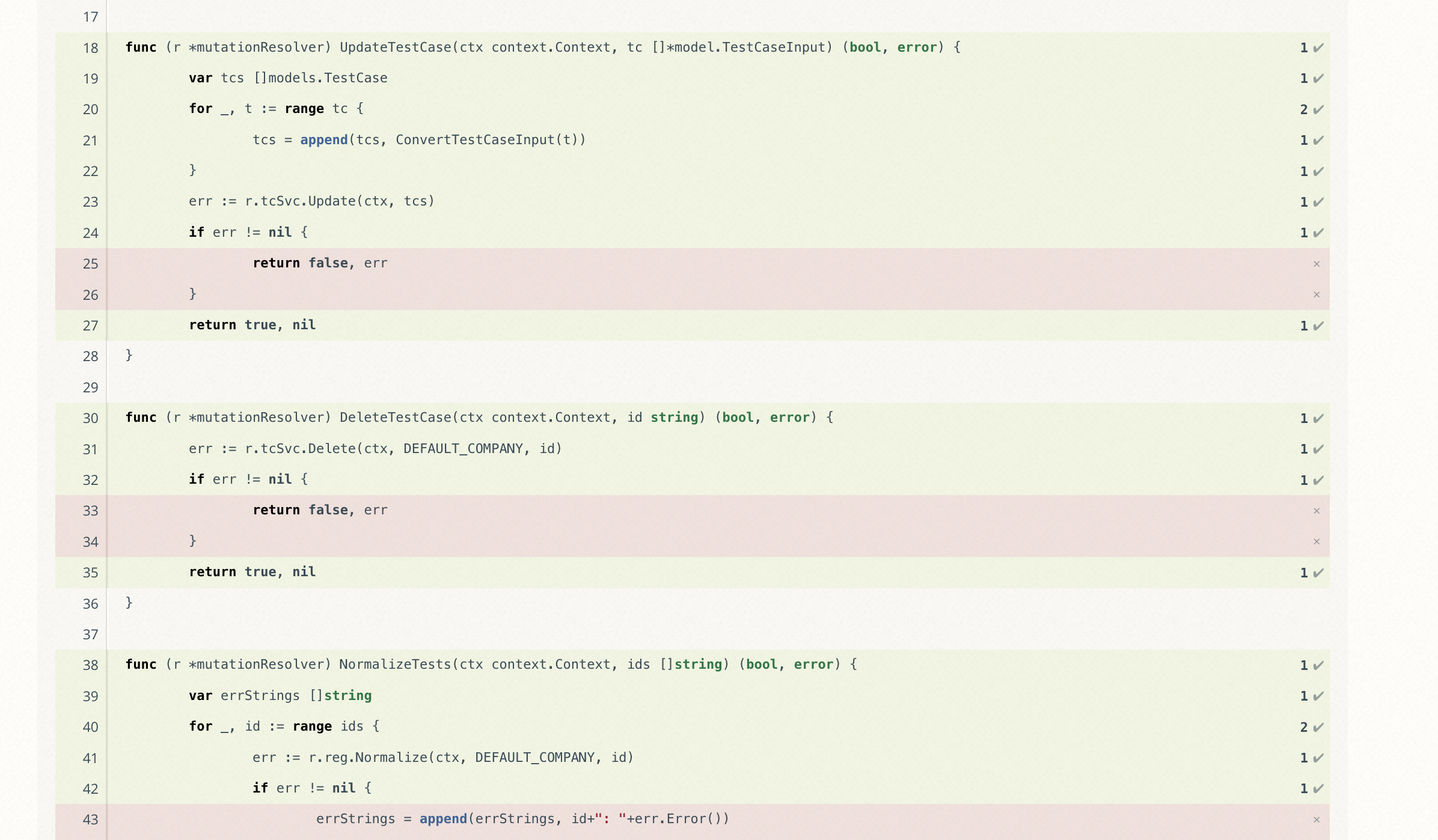
- Easier to achieve than branch coverage
- Provides a quick baseline of test completeness
- Ensures no "dead code" is left untested