| id | k8s-proxy | ||||
|---|---|---|---|---|---|
| title | K8s Record Replay | ||||
| description | The following sample app to test Keploy integration capabilities using NextJS,Drizzle and Postgres. | ||||
| tags |
|
||||
| keyword |
|
import ProductTier from '@site/src/components/ProductTier';
This guide demonstrates how to use Keploy Proxy to perform live traffic recording and replay in a Kubernetes environment.
Start by cloning the e-commerce sample application repository and switching to the Kubernetes setup branch.
git clone https://github.com/keploy/ecommerce_sample_app.git
cd ecommerce_sample_app
git checkout k8s
This branch contains all Kubernetes manifests and configurations required for this guide.
Make sure you have the following installed:
- Docker
- Kind
- kubectl
- Helm
Verify installations:
docker --version
kind --version
kubectl version --client
helm versionYou can use the Keploy Kubernetes proxy with any Kubernetes cluster, whether it is running in production or in a local environment. For this quickstart, we use a local Kind cluster to provide an overview of how the Keploy Kubernetes proxy works.
We’ll use an e-commerce sample application deployed on a local Kubernetes cluster (Kind) to demonstrate Keploy’s live record and replay capabilities with real microservices traffic.
Note: If you already have a Kubernetes cluster running, you can skip the deployment steps.
Create a local Kubernetes cluster named ecommerce:
kind create cluster --name ecommerceThe application consists of multiple services. Build the Docker images locally so they can be used inside the Kind cluster.
docker build -t user-service:latest ./user_service
docker build -t product-service:latest ./product_service
docker build -t order-service:latest ./order_service
docker build -t apigateway:latest ./apigatewaySince the Kubernetes manifests use imagePullPolicy: Never, the images must be manually loaded into the Kind cluster.
kind load docker-image user-service:latest --name ecommerce
kind load docker-image product-service:latest --name ecommerce
kind load docker-image order-service:latest --name ecommerce
kind load docker-image apigateway:latest --name ecommerce
Note
The
mysql:8.0andlocalstack/localstack:3.3images will be pulled automatically by Kind if not present locally. You may also load them manually to speed up cluster startup.
Apply all Kubernetes manifests:
kubectl apply -f k8s/Check the status of pods:
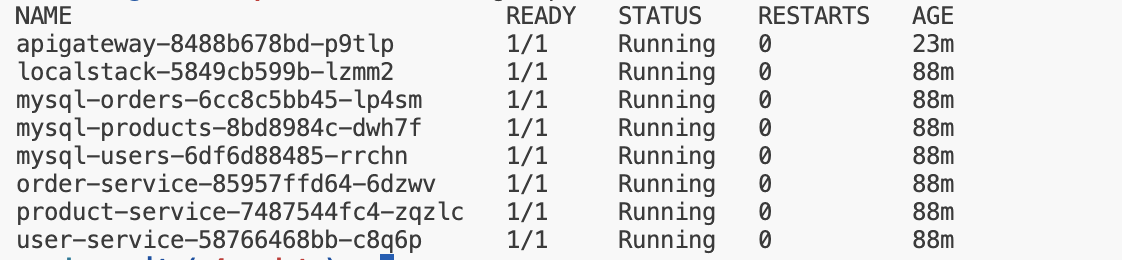
kubectl get podsWait until all pods are in the Running state.
<img src="https://keploy-devrel.s3.us-west-2.amazonaws.com/k8s-proxy/k8s_pods.png" alt="Sample Keploy K8s proxy" width="100%" style={{ borderRadius: '5px' }}/>
The API Gateway is exposed via a NodePort service.
For local environments use port-forwarding:
kubectl port-forward service/apigateway 8083:8083Access the application at:
http://localhost:8083
At this point, your e-commerce application is live and ready to receive traffic.
Visit:
https://app.keploy.io
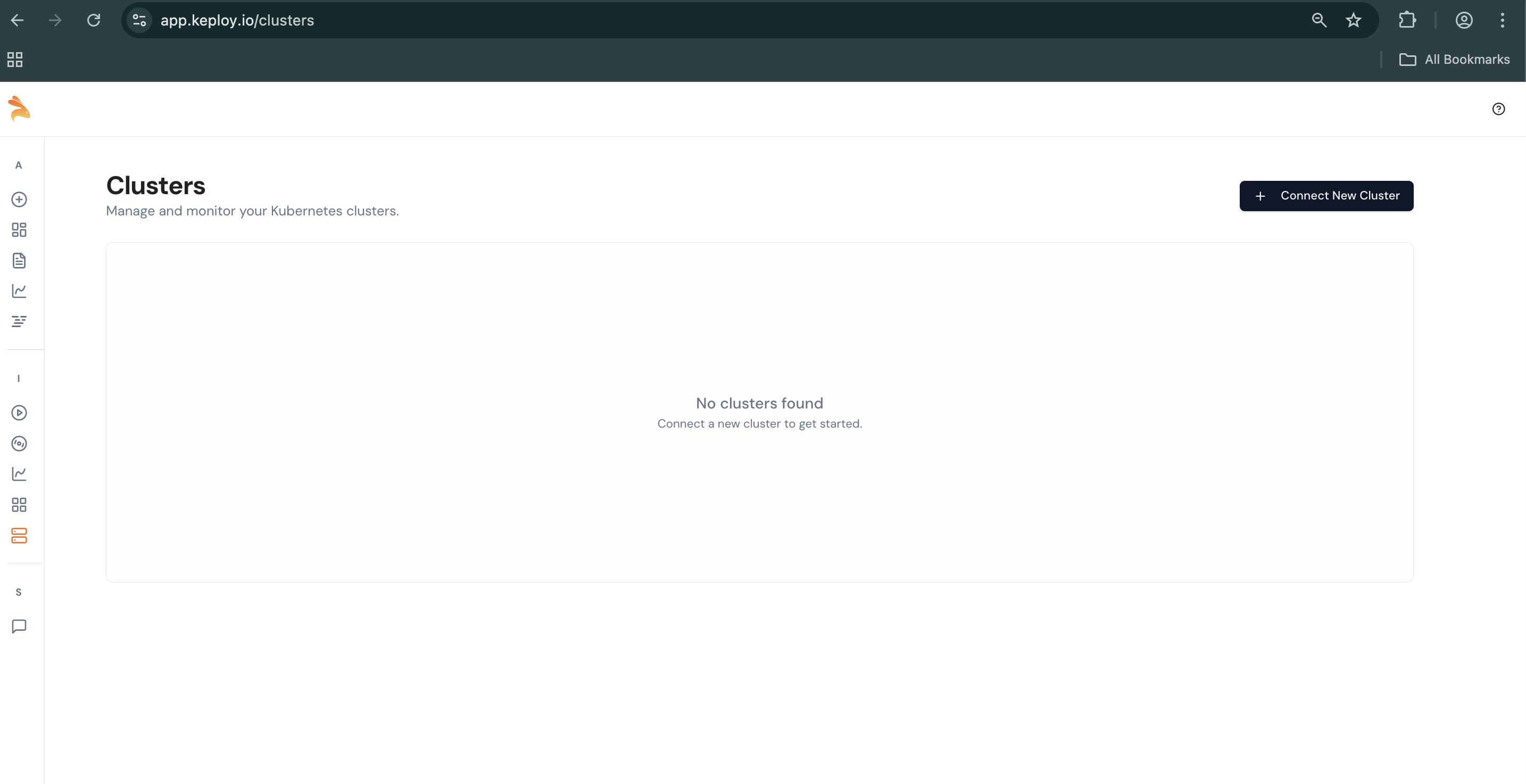
- Navigate to Integration Testing
- Click on Clusters
- Connect a new cluster
<img src="https://keploy-devrel.s3.us-west-2.amazonaws.com/k8s-proxy/connect_cluster.png " alt="Sample Keploy K8s proxy" width="100%" style={{ borderRadius: '5px' }}/>
Provide the following information:
-
Cluster Name:
ecommerce -
Ingress URL:
http://localhost:8080
<img src="https://keploy-devrel.s3.us-west-2.amazonaws.com/k8s-proxy/cluster_config.png" alt="Sample Keploy K8s proxy" width="100%" style={{ borderRadius: '5px' }}/>
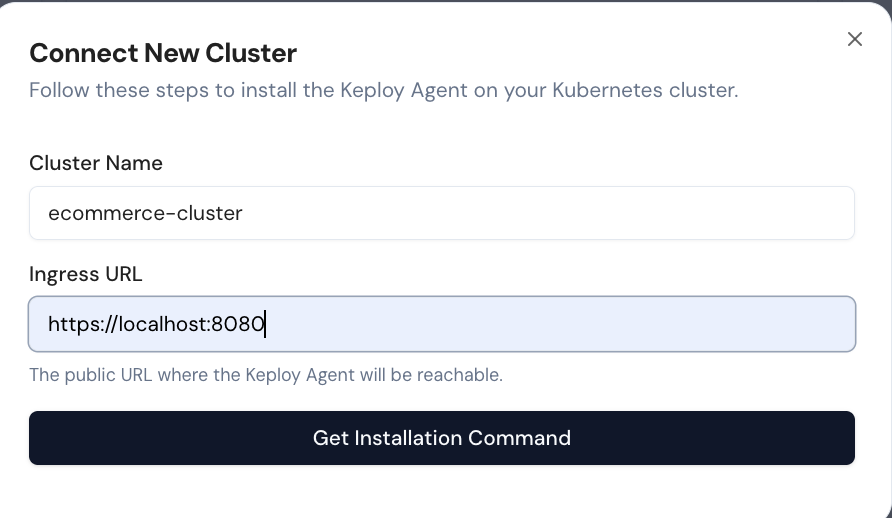
This allows the Keploy Proxy to observe and record live traffic from your Kubernetes application.
Note: For this quickstart, I am running it locally. If you are running your application in production, provide the necessary ingress URL.
Once you have provided the cluster details, you can install the Keploy Proxy in your Kubernetes cluster using Helm.
<img src="https://keploy-devrel.s3.us-west-2.amazonaws.com/k8s-proxy/k8s_helm_command.png" alt="Sample Keploy K8s proxy" width="100%" style={{ borderRadius: '5px' }}/>
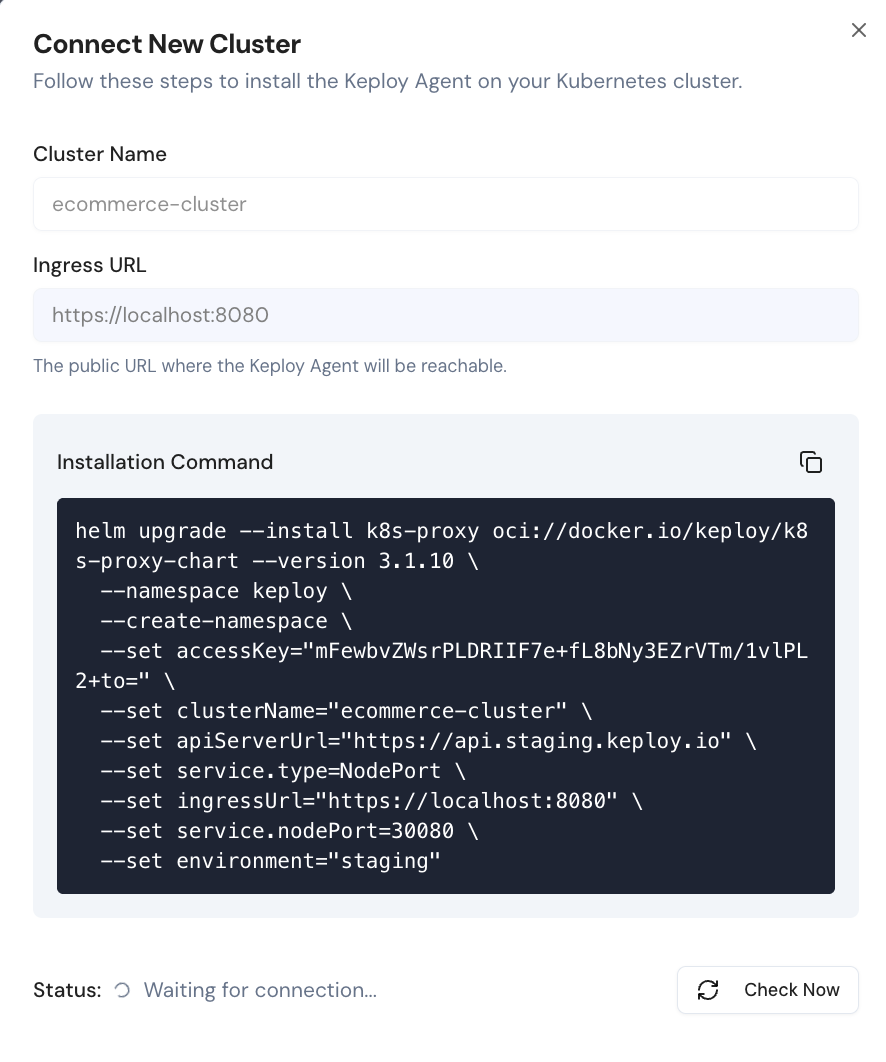
Paste the Helm command into the terminal. Once the installation is complete, verify that the Keploy Proxy is running.
Note: The Keploy Proxy will be installed in the keploy namespace.
kubectl get pods -n keploy<img src="https://keploy-devrel.s3.us-west-2.amazonaws.com/k8s-proxy/keploy_proxy.png" alt="Sample Keploy K8s proxy" width="100%" style={{ borderRadius: '5px' }}/>

Note: You need to port-forward the Keploy Proxy when running this setup on a local machine.
kubectl port-forward -n keploy svc/k8s-proxy 8080:8080Once the Keploy Proxy is installed, you can view the list of running pods in the dashboard.
<img src="https://keploy-devrel.s3.us-west-2.amazonaws.com/k8s-proxy/keploy_list_pods.png" alt="Sample Keploy K8s proxy" width="100%" style={{ borderRadius: '5px' }}/>
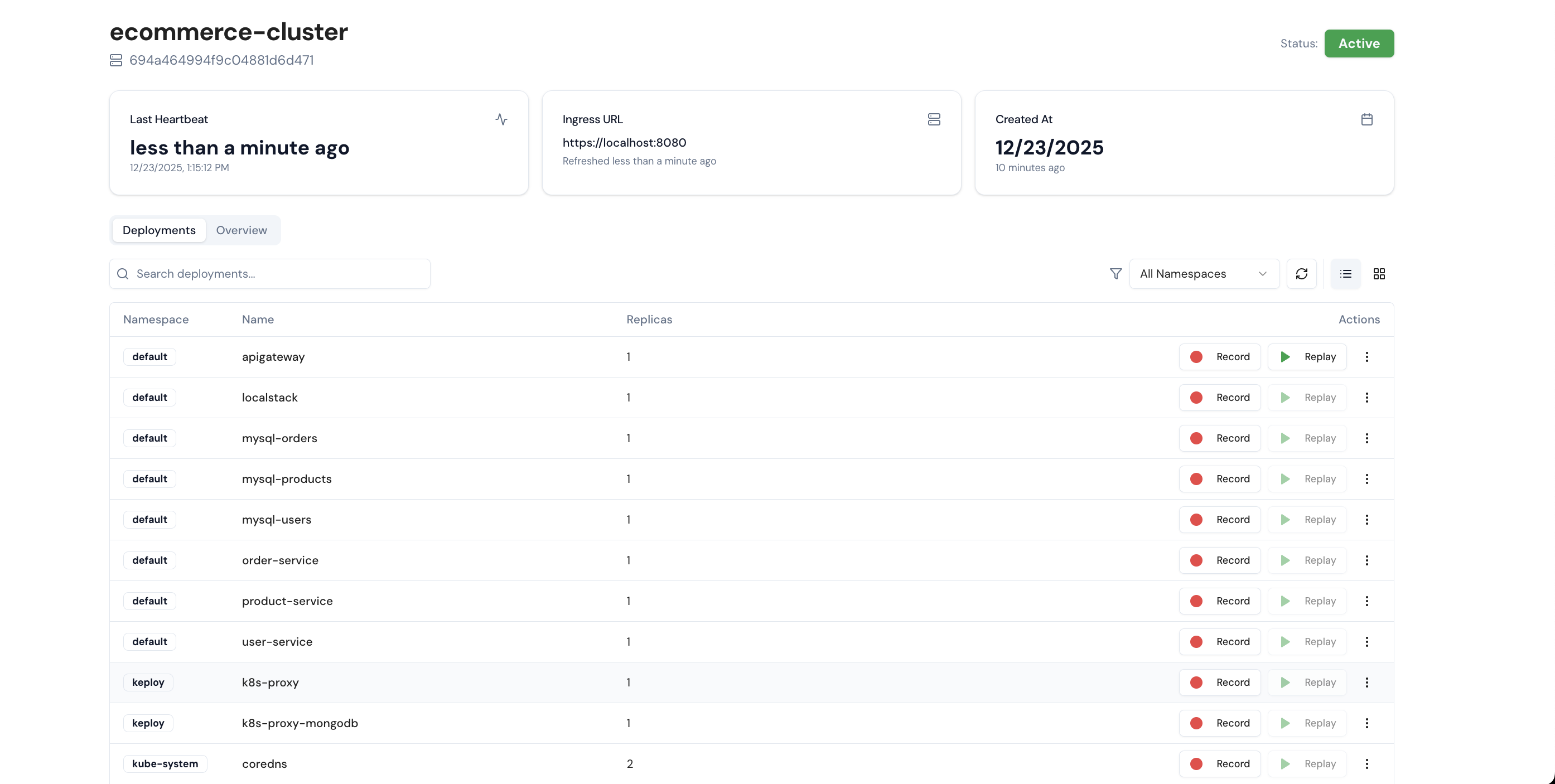
You can start recording live traffic from any of your pods by clicking Start Recording. For this quickstart, the apigateway pod is used.
<img src="https://keploy-devrel.s3.us-west-2.amazonaws.com/k8s-proxy/keploy_start_recording.png" alt="Sample Keploy K8s proxy" width="100%" style={{ borderRadius: '5px' }}/>
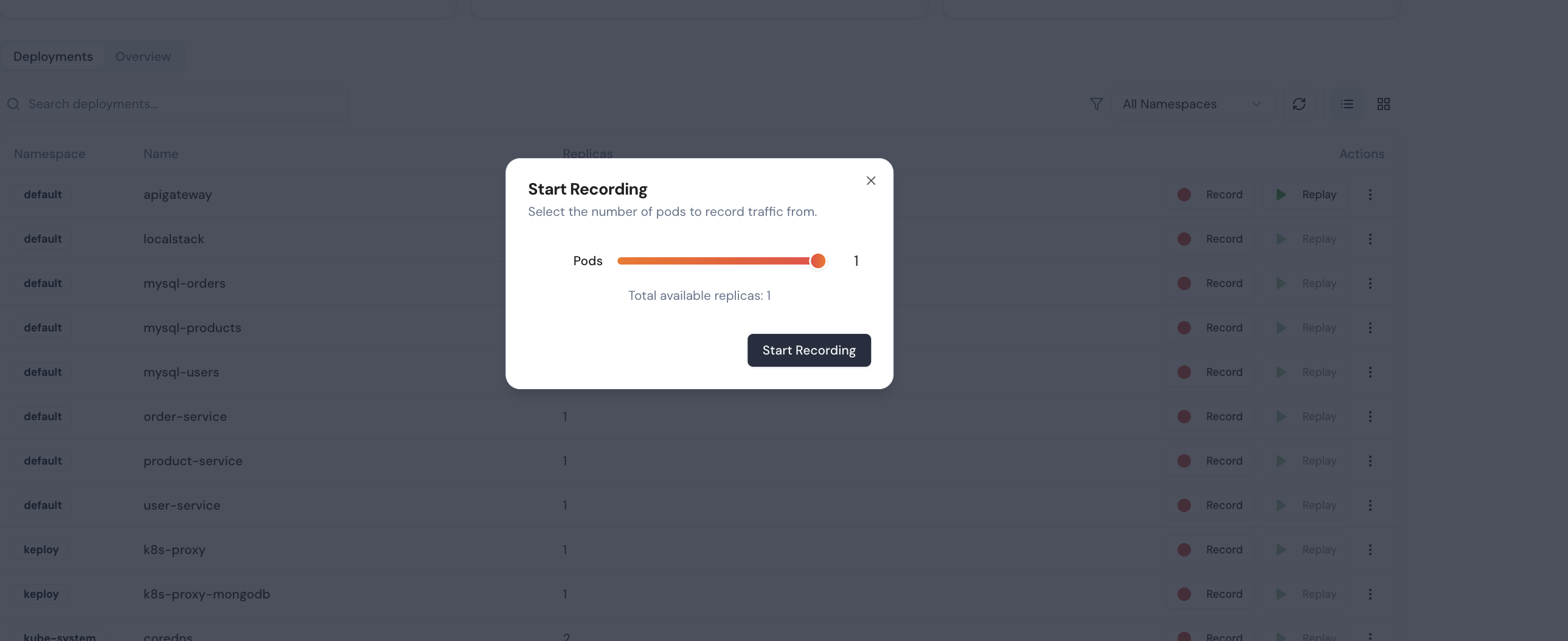
Send a request to your API Gateway pod, and Keploy will capture the traffic.
<img src="https://keploy-devrel.s3.us-west-2.amazonaws.com/k8s-proxy/keploy_live_capturing.png" alt="Sample Keploy K8s proxy" width="100%" style={{ borderRadius: '5px' }}/>
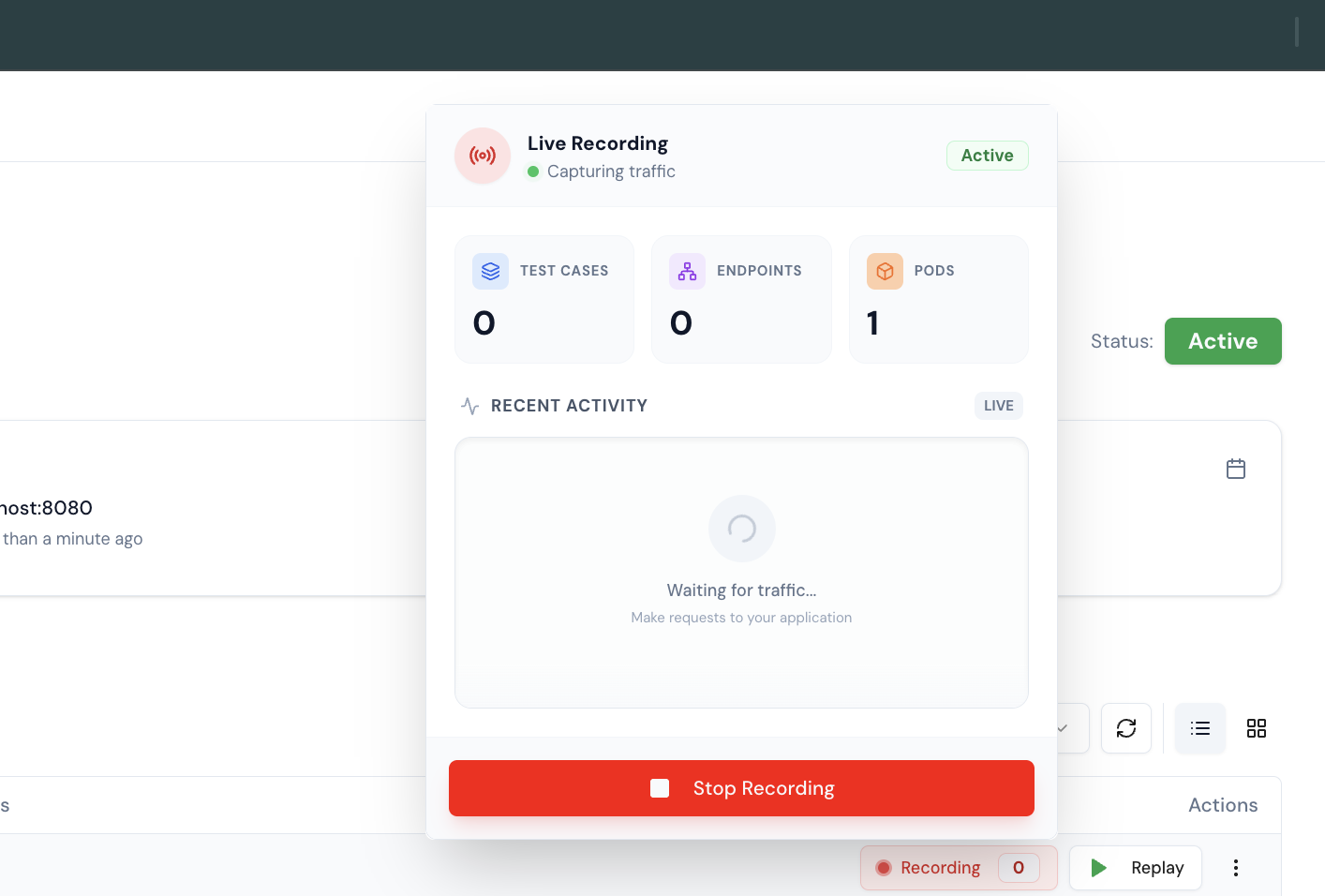
Once you have sent a request to your API Gateway pod, you can see the live traffic being captured.
<img src="https://keploy-devrel.s3.us-west-2.amazonaws.com/k8s-proxy/keploy_record_live_traffic.png" alt="Sample Keploy K8s proxy" width="100%" style={{ borderRadius: '5px' }}/>
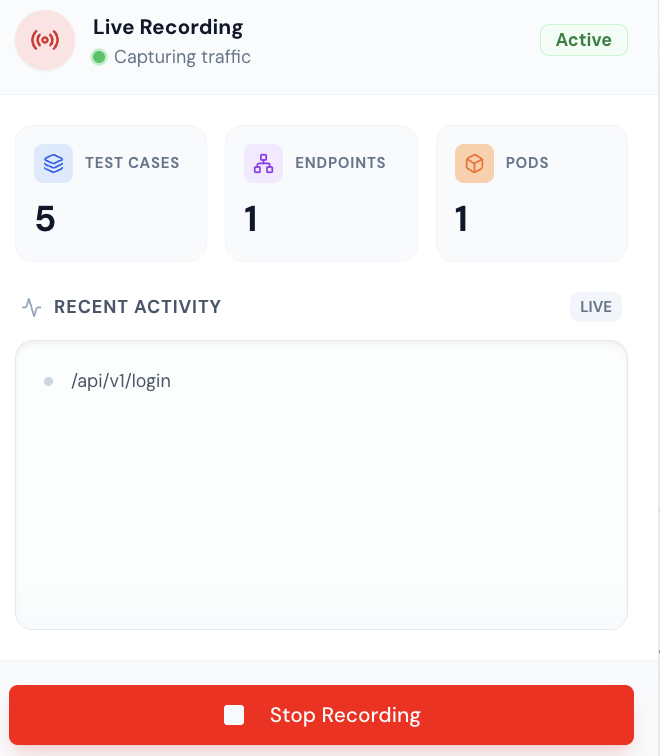
Once you have sent a request to your API Gateway pod, you can stop recording by clicking Stop Recording. To view the list of recordings, navigate to the recordings page, where you can see the captured traffic.
<img src="https://keploy-devrel.s3.us-west-2.amazonaws.com/k8s-proxy/keploy_recordings_total.png" alt="Sample Keploy K8s proxy" width="100%" style={{ borderRadius: '5px' }}/>
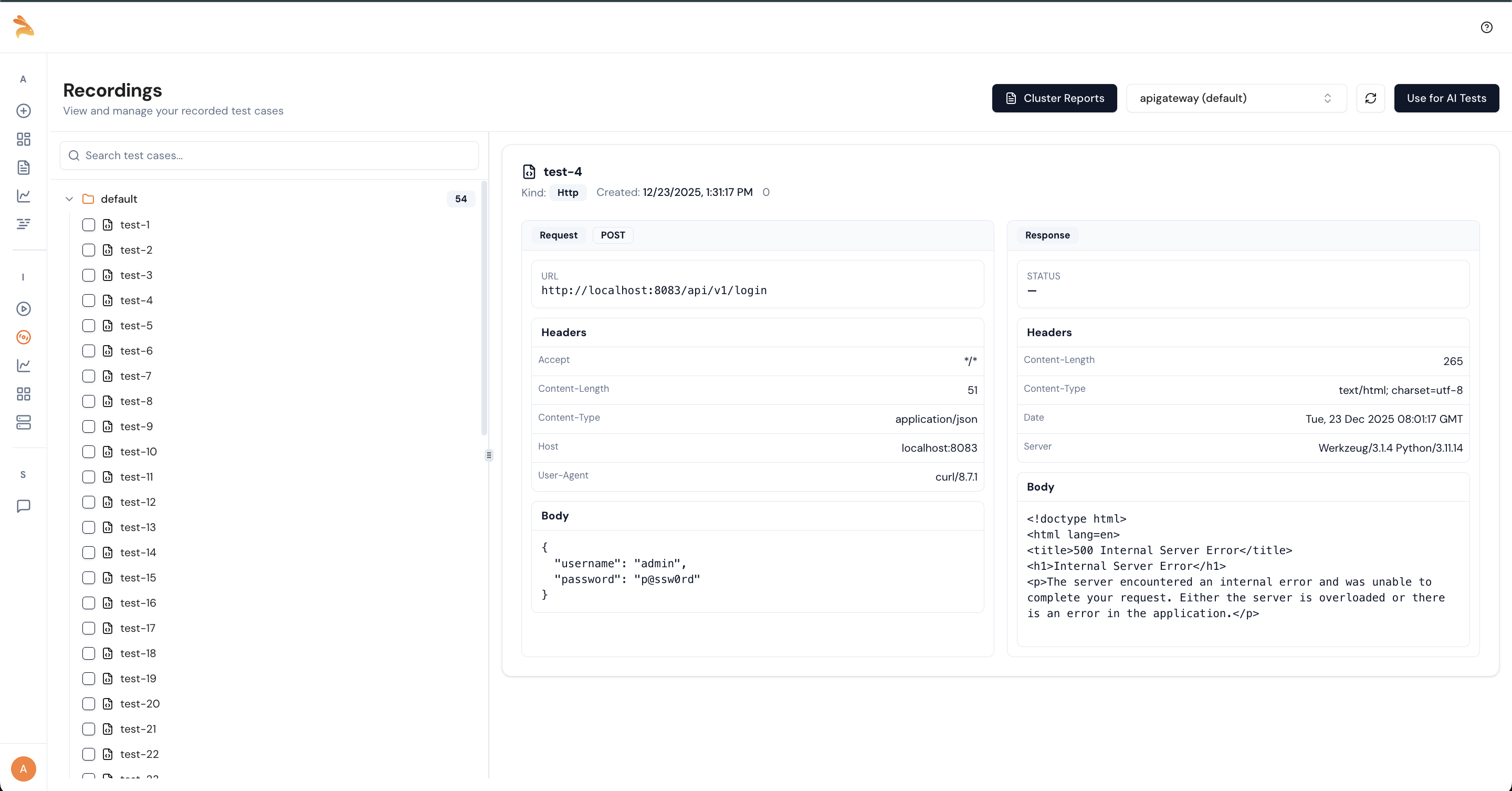
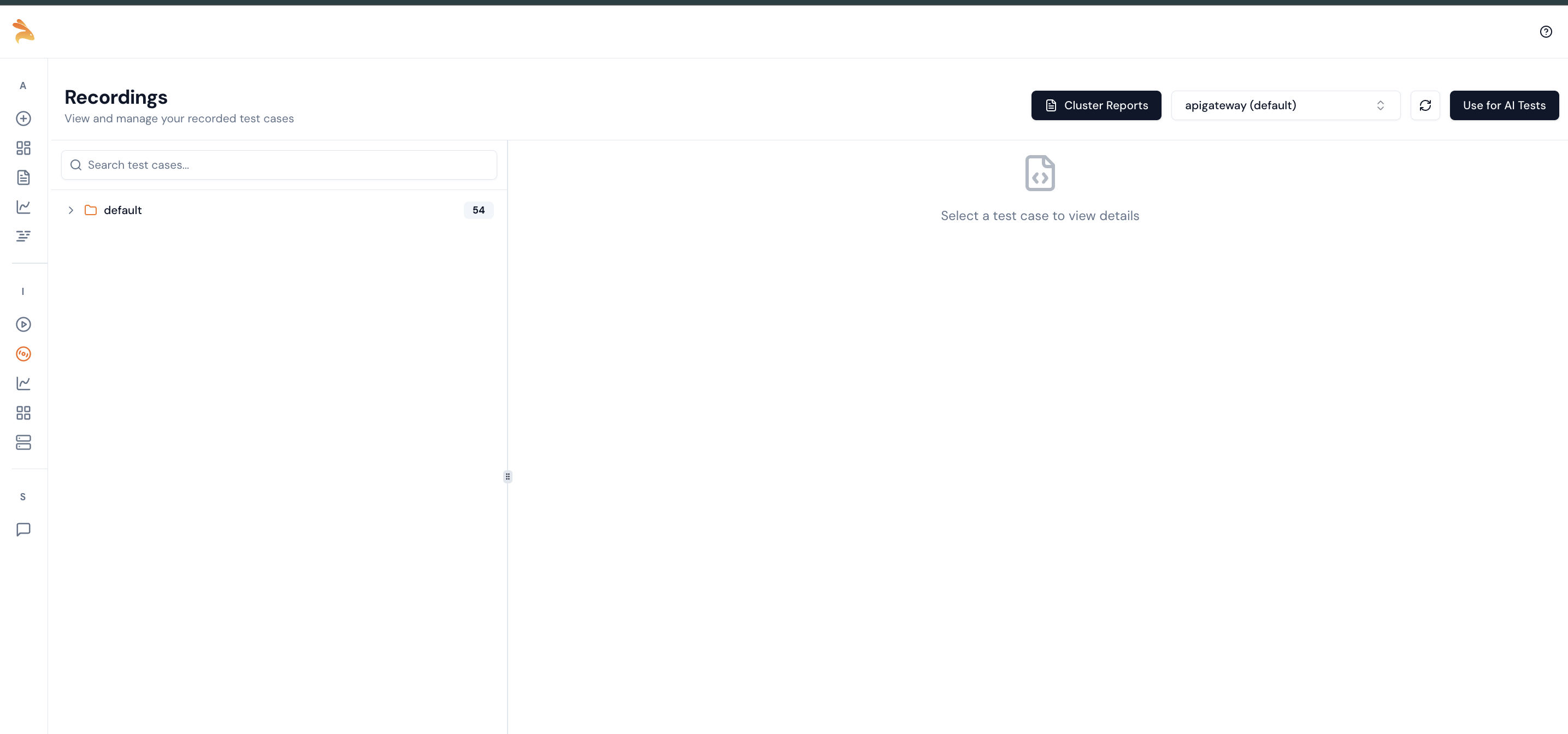
Did you notice something interesting in the dashboard? Once you have recorded a test, you can use AI to increase coverage. To generate additional tests, click Use AI for Tests.
<img src="https://keploy-devrel.s3.us-west-2.amazonaws.com/k8s-proxy/keploy_recording_dashboard.png" alt="Sample Keploy K8s proxy" width="100%" style={{ borderRadius: '5px' }}/>
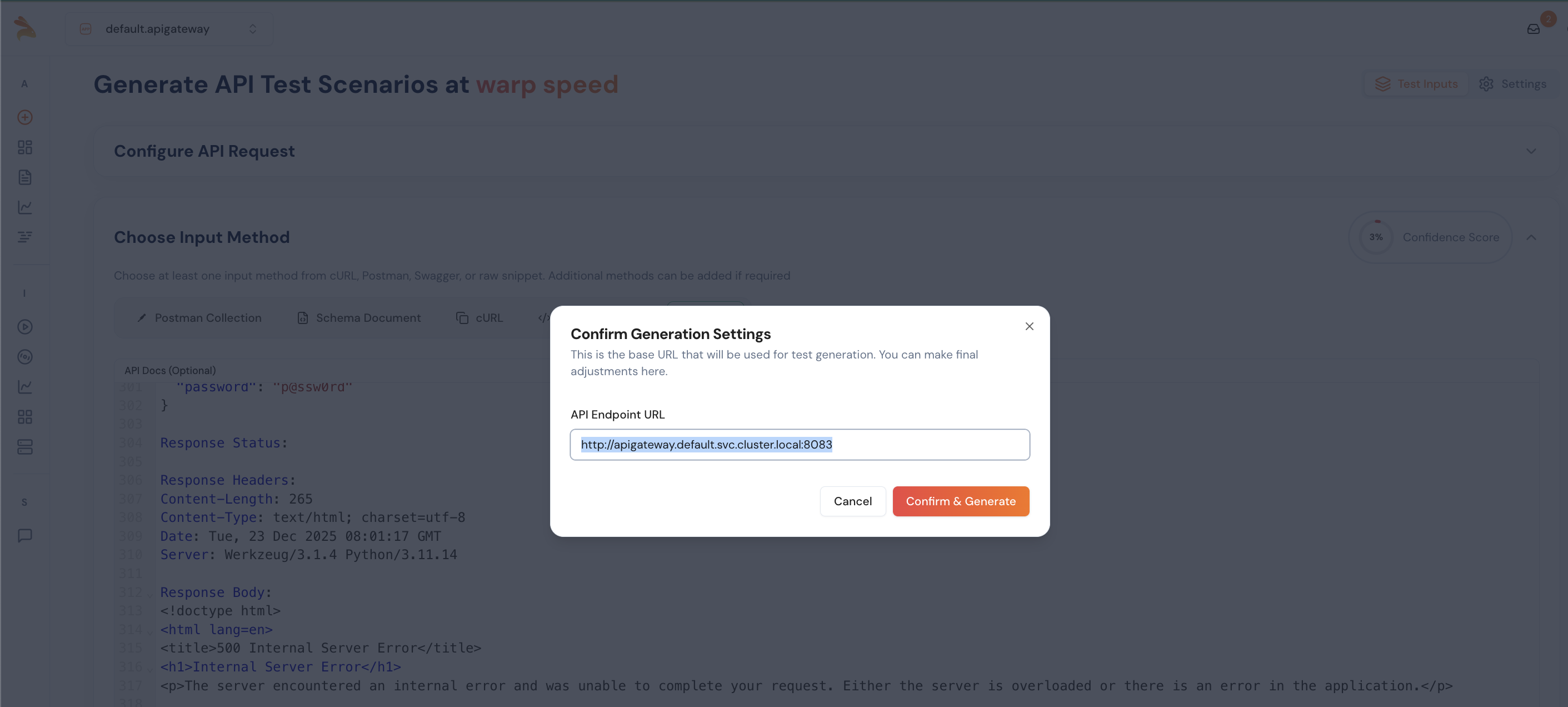
Once you click Use AI for Tests, you can view the generation settings.
<img src="https://keploy-devrel.s3.us-west-2.amazonaws.com/k8s-proxy/keploy_k8s_atg.png" alt="Sample Keploy K8s proxy" width="100%" style={{ borderRadius: '5px' }}/>
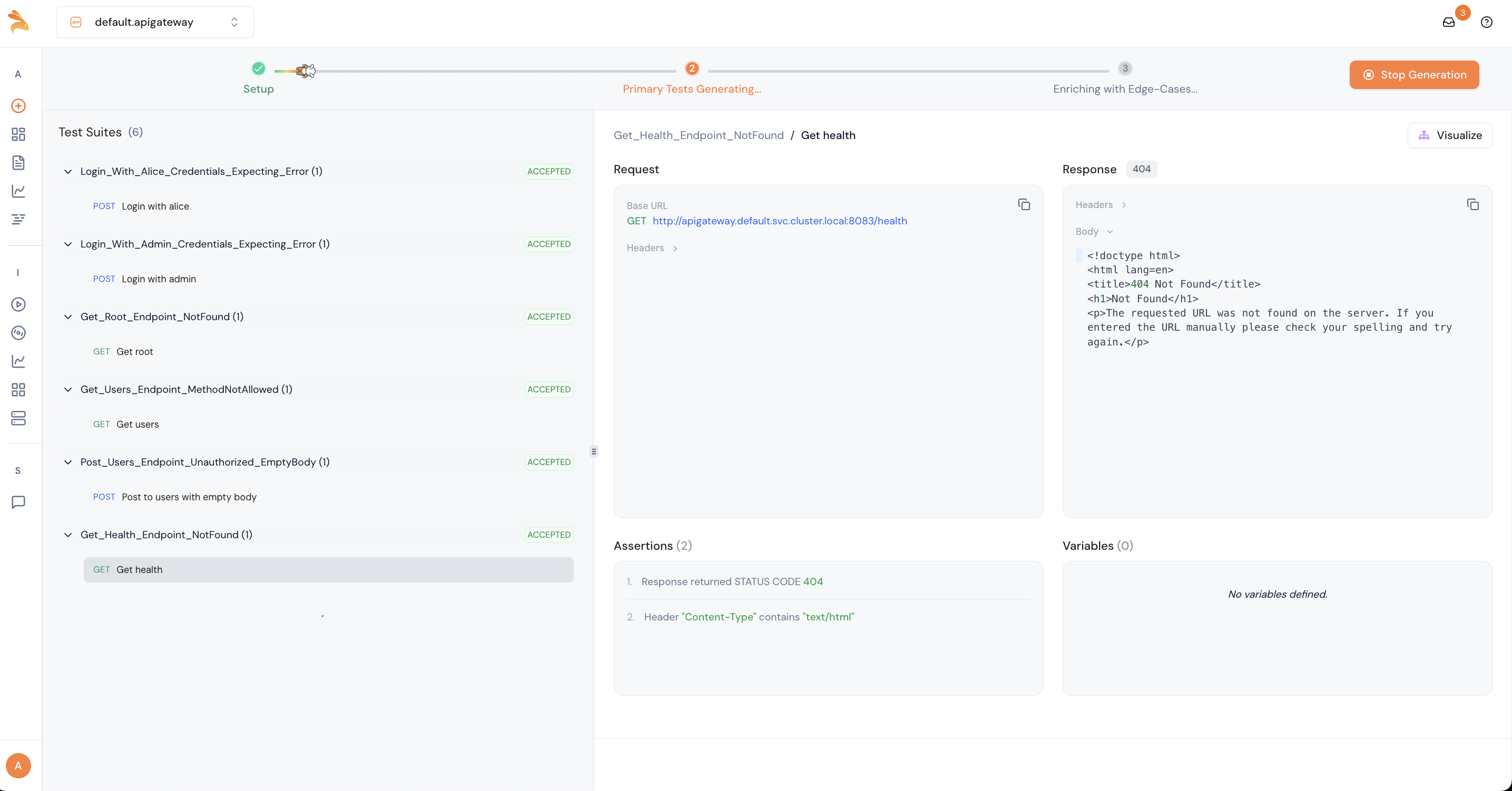
Once initiated, you can see the AI start generating test cases from the recorded traffic. The recorded traffic is used as input to create additional test cases.
<img src="https://keploy-devrel.s3.us-west-2.amazonaws.com/k8s-proxy/keploy_k8s_generation.png" alt="Sample Keploy K8s proxy" width="100%" style={{ borderRadius: '5px' }}/>
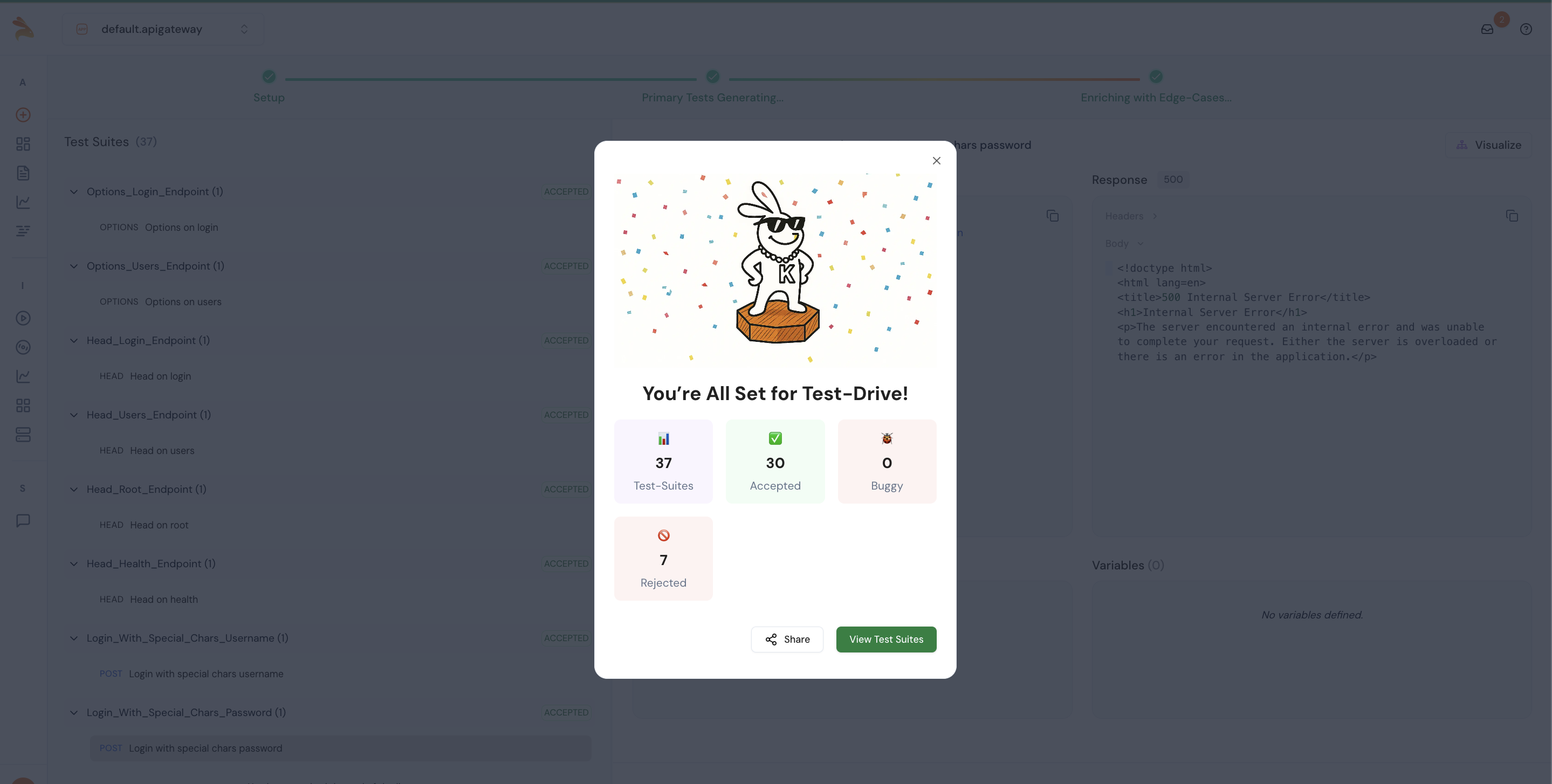
After test generation, you can view the total number of test suites categorized as accepted, buggy, and rejected.
<img src="https://keploy-devrel.s3.us-west-2.amazonaws.com/k8s-proxy/keploy_k8s_reports.png" alt="Sample Keploy K8s proxy" width="100%" style={{ borderRadius: '5px' }}/>
In this quickstart, we demonstrated how to use the Keploy Proxy in Kubernetes to record live traffic and generate tests using AI—all without writing manual tests. This is only a quickstart; you can follow the same steps to record real, production-like traffic and generate tests using AI.
Happy Testing with Keploy