- Collections工具类
- 增强for循环
- 泛型
- 红黑树
- Set集合
public static void shuffle(List<?> list):打乱集合顺序。public static <T> void sort(List<T> list):将集合中元素按照默认规则排序。public static <T> void sort(List<T> list,Comparator<? super T> ):将集合中元素按照指定规则排序。
/**
 * java.util.Collections集合操作的工具类
 * 主要对Collection集合操作(单列集合)
 * 方法:
 *   static shuffle(List list)元素随机的排列
 *   static sort(List list)对List集合进行排序,升序
 *   static sort(List list,Comparator c)对List集合进行排序,升序
 *                         第二个参数比较器,根据比较器的结果,进行排序
 */
public static void main(String[] args) {
	ArrayList<Integer> list = new ArrayList<Integer>();
    list.add(100);
    list.add(300);
    list.add(200);
    list.add(50);
	//排序方法
	Collections.sort(list);
	System.out.println(list);
}创建一个学生类,存储到ArrayList集合中完成指定排序操作。
Student 类
public class Student{
    private String name;
    private int age;
	//构造方法
    //get/set
 	//toString
}
接口实现类
/**
 * 自定义接口Comparator的实现类
 * 实现接口,重写抽象方法,创建Person对象的比较器
 */
public class MyComparator implements Comparator<Student>{
    /**
     * 重写接口中的抽象方法
     * 返回值是int,方法的参数是 Student o1, Student o2
     * o2对象-o1对象,如果是正数,大的在前面
     */
    public int compare(Student o1,Student o2){
        //o1是李四,o2是张三
        //张三的年龄-李四的年龄
        // 谁的年龄大,谁在前面
        return  o2.getAge() - o1.getAge();// 正数
    }
}
测试类
public static void main(String[] args) {
    ArrayList<Student> list = new ArrayList<Student>();
    list.add(new Student("rose",18));
    list.add(new Student("jack",16));
    list.add(new Student("abc",20));
       /**
         * 使用工具类Collections方法sort对集合排序
         * 集合存储了自定义的对象,Student
         * sort:
         *   对集合中的元素排序
         *   对象Student无法排序导致
         *   自定义Student的顺序
         *   sort方法的第二个参数 Comparator类型的对象
         *   传递 Comparator接口的实现类对象
         */
    Collections.sort(list, new MyComparator());
    }
    for (Student stu : list) {
    	System.out.println(student);
    }
 }
Student{name='jack', age=16}
Student{name='rose', age=18}
Student{name='abc', age=20}格式
for(元素的数据类型  变量 : Collection集合or数组){
  	//写操作代码
}注意:它用于遍历Collection和数组。通常只进行遍历元素,不能在遍历的过程中对集合元素进行增删改操作。
*Iterable子接口Collection*
*Collection子接口,List Set*
*任何单列集合,都可以使用增强for循环,包含数组*
示例代码
public static void main(String[] args) {
     /**
     * 增强for循环遍历数组
     * 思考问题:
     *    好处: 减少代码量,适合遍历
     *    弊端: 不能动容器中的任何元素
     */
    int[] arr = {3,5,6,87};
    //使用增强for遍历数组
    for(int a : arr){//a代表数组中的每个元素
    	System.out.println(a);
    }
  /**
     * 增强for循环遍历集合
     */
    Collection<String> coll = new ArrayList<String>();
    coll.add("小河神");
    coll.add("老河神");
    coll.add("神婆");
    for(String s :coll){
    	System.out.println(s);
    }
    /**
     * 增强for循环遍历集合
     * 自定义对象
     */
    public static  void method_3(){
     List<Person> list = new ArrayList<Person>();
        list.add(new Person("张三",15));
        list.add(new Person("李四",19));
        for (Person p:list){
            System.out.println(p);
      }
}- 将运行时期的ClassCastException,转移到了编译时期变成了编译失败。
- 避免了类型强转的麻烦。
- 泛型,只在编译的时候有效,编译成功的class文件中,没有泛型 (伪泛型)
格式
集合类<要存储的数据类型> 变量名 = new 集合类<要存储的数据类型>();例如,ArrayList<String> list = new ArrayList<String>();
此时,变量E的值就是String类型,那么我们的类型就可以理解为:
class ArrayList<String>{
     public boolean add(String e){ }

     public String get(int index){  }
     ...
}再例如,ArrayList<Integer> list = new ArrayList<Integer>();
此时,变量E的值就是Integer类型,那么我们的类型就可以理解为:
class ArrayList<Integer> {
     public boolean add(Integer e) { }

     public Integer get(int index) {  }
     ...
}当使用泛型类或者接口时,传递的数据中,泛型类型不确定,可以通过通配符<?>表示。但是一旦使用泛型的通配符后,只能使用Object类中的共性方法,集合中元素自身方法无法使用。
泛型的通配符:不知道使用什么类型来接收的时候,此时可以使用?,?表示未知通配符。
此时只能接受数据,不能往该集合中存储数据。
举个例子:
public static void main(String[] args) {
    Collection<Intger> list1 = new ArrayList<Integer>();
    getElement(list1);
    Collection<String> list2 = new ArrayList<String>();
    getElement(list2);
}
//?为通配符,可以接收任意类型
public static void getElement(Collection<?> coll){
    Iterator<?> it = coll.iterator();
    while(it.hasNext()){
        System.out.println(it.next());
    }
}注意:泛型不存在继承关系 Collection list = new ArrayList();这种是错误的。
之前设置泛型的时候,实际上是可以任意设置的,只要是类就可以设置。但是在JAVA的泛型中可以指定一个泛型的上限和下限。
- 格式:
类型名称 <? extends 类 > 对象名称 - 意义:
只能接收该类型及其子类
- 格式:
类型名称 <? super 类 > 对象名称 - 意义:
只能接收该类型及其父类型
举例
需求:创建老师类和班主任类,提供姓名和年龄属性,并都具有work方法。将多个老师对象和多个班主任对象存储到两个集合中。提供一个方法可以同时遍历这两个集合,并能调用work方法。
Employee员工类:
public abstract class Employee {
    private String name;
    private int age;

    public Employee() {
    }

    public Employee(String name, int age) {
        this.name = name;
        this.age = age;
    }
    //省略get/set
    public abstract void work();
}
Teacher类:
public class Teacher extends Employee{

    public Teacher() {
    }

    public Teacher(String name, int age) {
        super(name, age);
    }

    @Override
    public void work() {
        System.out.println("老师在上课");
    }
}
Manager类:
public class Manager extends Employee {

    public Manager() {
    }

    public Manager(String name, int age) {
        super(name, age);
    }

    @Override
    public void work() {
        System.out.println("班主任管理班级");
    }
}
测试类:
public static void main(String[] args) throws UnsupportedEncodingException {
        List<Teacher> teacherList = new ArrayList<Teacher>();
        teacherList.add(new Teacher("张三",30));
        teacherList.add(new Teacher("李四",32));

        List<Manager> managerList = new ArrayList<Manager>();
        managerList.add(new Manager("王五",25));
        managerList.add(new Manager("赵六",23));
        getElement(teacherList);
        getElement(managerList);
    }
	//定义方法,参数为List集合,泛型被限定为Employee,可以接收的泛型为Employee或者子类!
    public static void getElement(List<? extends  Employee> list){
        Iterator<? extends Employee> it = list.iterator();
        while (it.hasNext()){
            Employee employee = it.next();
            System.out.println(employee.getName()+"::"+employee.getAge());
            employee.work();
        }
}Set集合: 不包含重复的元素,没有索引
Set接口的实现类 HashSet, LinkedHashSet
Set接口中的抽象方法,和他的父接口Collection完全一样
Set集合有多个子类,这里我们介绍其中的java.util.HashSet、java.util.LinkedHashSet这两个集合。
注意:集合取出元素的方式可以采用:迭代器、增强for
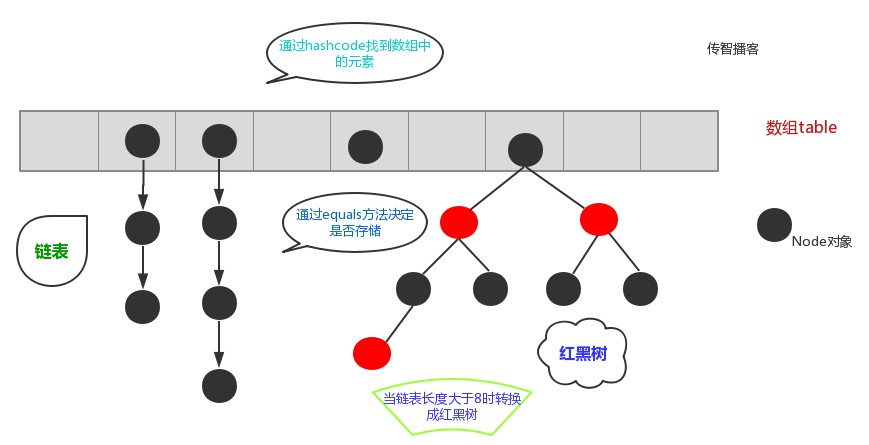
哈希表存储采用数组+链表+红黑树实现,当链表长度超过阈值(8)时,将链表转换为红黑树,这样大大减少了查找时间。
-
哈希表的初始化容量,数组长度为16个。
- 当数组容量不够时,扩容为原数组长度的2倍
-
加载因子为0.75。
- 指示当数组的容量被使用到长度的75%时,进行扩容。
哈希表存储字符对象的过程图

给HashSet中存放自定义类型元素时,需要重写对象中的hashCode和equals方法,建立自己的比较方式,才能保证HashSet集合中的对象唯一.
创建自定义Student类:
public class Student {
    private String name;
    private int age;

	//get/set
    //可以直接生成
    @Override
    public boolean equals(Object o) {
        if (this == o)
            return true;
        if (o == null || getClass() != o.getClass())
            return false;
        Student student = (Student) o;
        return age == student.age &&
               Objects.equals(name, student.name);
    }

    @Override
    public int hashCode() {
        return Objects.hash(name, age);
    }
}
创建测试类:
public static void main(String[] args) {
    //创建集合对象   该集合中存储 Student类型对象
    HashSet<Student> stuSet = new HashSet<Student>();
    //存储
    stuSet.add(new Student("于谦", 43));
    stuSet.add(new Student("郭德纲", 44));
    stuSet.add(new Student("于谦", 43));
    stuSet.add(new Student("郭麒麟", 23));

    for (Student stu2 : stuSet) {
    	System.out.println(stu2);
    }
 }