
Tiny, easy to use tool to show toast-like notifications on the web page.
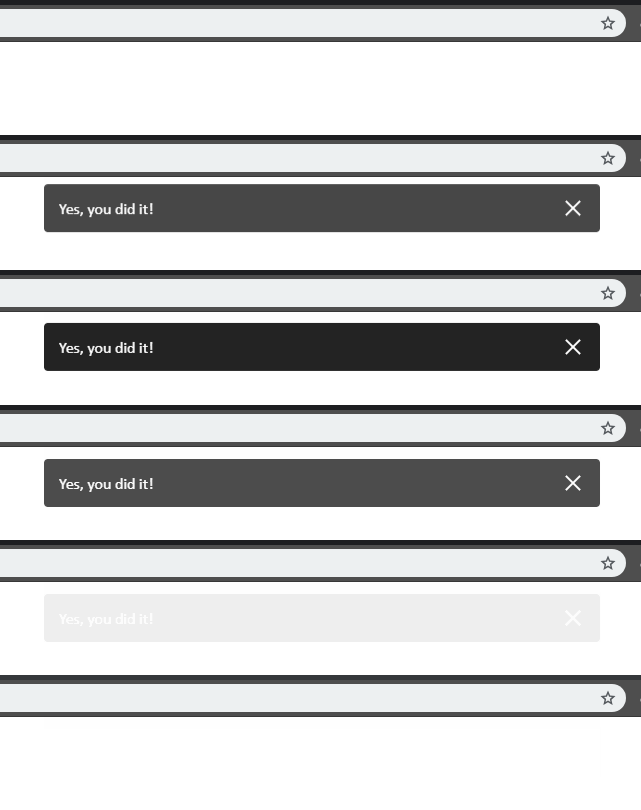
You can read the CHANGELOG.
- Features
- How to use
- Toast function arguments
- Instance of ToastMeClass
- class ToastMeClass
- Contributing
- Exported in a umd format so works everywhere
- Fully compatible with popular frameworks, such as React, Vue, Angular, jQuery, etc
- Customizable
- Light-weight (17kB until gzip, 6kB zipped)
- Supports actions' button inside toast
- Closeable
- Pauses toast's timer on hover
- Accepts CSS classes for styling
yarn add toast-me
# or
npm install toast-me
import toast from 'toast-me';toast('My message');
// or with the instance
const toastInstance = toast('My message');toast('My message', { duration: 3000, toastClass: 'my-toast-class' /* ... */ });toast('My message', 'error');toast(
'My message',
{ duration: 1000 },
{
label: 'Confirm',
action: () => alert('Cool!'),
class: 'my-custom-class', // optional, CSS class name for action button
},
);toast(
'My message',
null,
{
label: 'Confirm',
action: () => alert('Cool!'),
},
);toast(
'<i>My message</i> ☻',
{ useUnsafeHtmlContent: true },
);const uniqId = 'messageRoot_' + Math.random().toString().slice(2);
toast(`<div id="${uniqId}" />`, { useUnsafeHtmlContent: true });
ReactDOM.render(
<div>My message</div>,
document.getElementById(uniqId)
)toast(message, [options, [action]]);Function accepts three arguments:
message- message to show in toast,options- toast customization options,action- some action button options.
Returns instance of ToastMeClass. You can learn method of it here
Accepts string, any message to put in toast.
Text shown in one line, no wraps allowed.
Overflowed text will be hidden with ellipsis.
Complete text shown on hover with the title attribute on toast node.
Optional. Accepts object with any allowed fields, or string as a name of options preset, or null.
If you don't need to set options, but need to pass an action - pass null instead options.
Default options preset (all available options with their default values):
const defaults = {
  position: 'top',
  type: 'over',
  toastClass: '',
  removedToastClass: '',
  containerClass: '',
  useUniqueContainer: false,
  useUnsafeHtmlContent: false,
  closeable: true,
  timeoutOnRemove: 1000,
  duration: 5000,
}position- string, one of"top""bottom". Default"top".type- string, one of"over""chain". When"chain"- all messages shown in line, and when"over"- message covers previous. Default"over". NOTE: when you use toasts of different types in one app - that could cause toast display collisions.toastClass- string, CSS class name for toast node, can be used for custom toast styling. Default""- empty stringremovedToastClass- string, CSS class name for removed toast node, can be used for custom CSS animation or styling. Default""- empty stringcontainerClass- string, CSS class name for toast's container node, can be used for custom container styling. Once it is set, container node will have that class (classname won't be erased on next toast creating). If you want prevent this behaviour - setuseUniqueContaineroption totruewhen setcontainerClass. Default""- empty stringuseUniqueContainer- boolean, create new toast's container node, instead of re-using existing one, if it is presented. DefaultfalseuseUnsafeHtmlContent- boolean, allows passing HTML string as content. Defaultfalsecloseable- boolean, enables/hides "close" button on toast. DefaulttruetimeoutOnRemove- number, time in ms, till node should be removed from DOM after toast hides. Can be useful when you change hide animation by CSS and set new animation duration. To avoid element disappearing until animation ends set this option to larger or equal value than animation duration. Default1000duration- number, time in ms, how long should toast be shown. Default5000
default- all default options,error- everything default, except background color -#D40D00, set by CSS class.
Optional. Accepts object with three fields:
label- string, text to put in button.action- callback function - to be called on button click.class- string, CSS class for button node.
Has methods:
close()- Closes current toast.startTimer()- Starts/restarts timer with timeout, set in options object on toast create.stopTimer()- Stops timer, the toast won't disappear. After calling this you should handle toast's behavior by yourself (i.e. withclose()method).
import toast from 'toast-me';

const message = toast('Something');
// ...
message.stopTimer();
// ...
message.close();Has static methods:
removeAll(position)- Closes all toasts in that position. Accepts one argumentposition, default"top"(described in options section)
import { ToastMeClass } from 'toast-me';

ToastMeClass.removeAll('bottom');
This method has separate simplified alias
import { removeAllToasts } from 'toast-me';
removeAllToasts('bottom')You will need node.js and preferred to have yarn to run the project.
Copy project to your local folder and then run in project's root folder next command to load dependencies:
yarn
When you load all dependencies, you able to run several commands:
yarn build- produces production pack of library under thelibfolderyarn run-dev- produces development version of your library, runs file watcher and http server on http://localhost:3005yarn watch- produces development version of your library, runs a file watcheryarn test- runs the tests
Root folderdev/- Folder, containing development environment files. This folder is server withwebpack-dev-serverwithyarn run-devcommand.toast-me.jsandtoast-me.js.mapfiles inside are generated by webpack watcher from/srcfolder. You are able to change files in both folders and they are to be reloaded in browser.lib/- The place production pack will be located after build. Usually you won't need it, until you wan't to compile library by yourself and insert in your project manuallyscripts/- Node.js executable scripts' folder, such asdev-server.jsortest.js.config/- Configuration files' folder.
src/- Here is the code of library itself.